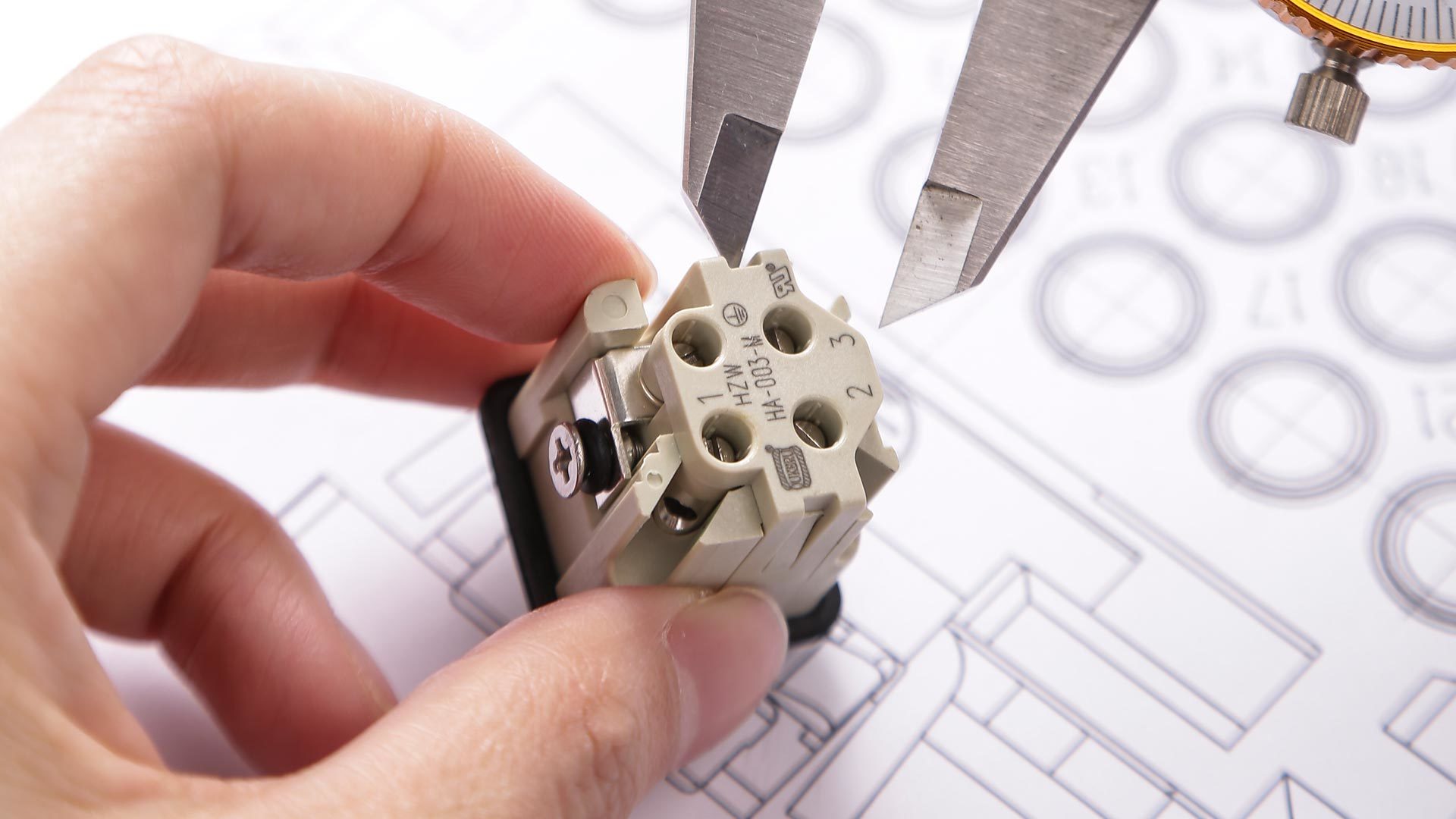
Heavy Duty Industrial Connector – Reliable Electrical Solution for Harsh Industrial Environments
Heavy duty industrial connector is a rugged electrical component designed for reliable power, signal, and data transmission in harsh industrial environments.


Heavy duty industrial connectors are robust electrical connection components designed to provide secure, reliable, and long-lasting transmission of power, signals, and data in demanding industrial applications. They are widely used in automation systems, heavy machinery, robotics, transportation systems, energy equipment, construction machinery, manufacturing plants, marine systems, and outdoor installations where durable electrical connections are essential.
These connectors are engineered to withstand harsh environmental conditions, including extreme temperatures, high vibration, dust, moisture, oil, and chemical exposure. Unlike standard connectors, heavy duty industrial connectors are built with reinforced housings, high-quality contacts, and advanced sealing systems to ensure stable electrical performance under heavy load and continuous operation.
The main components of a heavy duty industrial connector include a durable outer housing, precision contact terminals, insulating inserts, sealing gaskets, and locking mechanisms. Housings are often made from high-strength thermoplastics or die-cast aluminum alloys. Plastic housings provide lightweight and corrosion-resistant properties, while metal housings offer superior mechanical strength, electromagnetic interference (EMI) shielding, and thermal resistance. The material selection depends on the application environment and required performance.
A major advantage of heavy duty industrial connectors is their high current and voltage capacity. Depending on the model and configuration, they can handle low-power signals as well as high-power industrial equipment connections. This makes them suitable for a wide range of industrial applications, from factory automation to heavy machinery power distribution.
The contact terminals are usually manufactured from high-conductivity copper alloys with surface plating such as silver or gold. This ensures low electrical resistance, excellent conductivity, and long service life. The connectors are designed to maintain stable contact performance even under repeated mating cycles, vibration, and mechanical stress.
Heavy duty industrial connectors are equipped with secure locking systems to prevent accidental disconnection caused by vibration, mechanical impact, or movement. Locking mechanisms may include lever locks, screw locks, bayonet locks, or push-pull locking systems. These features ensure safe and stable operation in industrial settings.
Environmental protection is another important feature of these connectors. Many heavy duty industrial connectors meet IP65, IP67, or even IP69K standards, providing dust-tight and waterproof performance. This allows their use in outdoor installations, marine environments, mining operations, and heavy industrial facilities.
Modular design flexibility is another key benefit. Users can select different insert modules for power, signal, data, fiber optic, or hybrid applications within a single connector housing. This reduces the number of connectors required, simplifies wiring, and improves installation efficiency in complex industrial systems.
Heavy duty industrial connectors are widely applied in industrial robots, CNC machines, automated production lines, railway systems, renewable energy equipment such as wind turbines and solar arrays, marine systems, stage equipment, and heavy construction machinery. They ensure reliable connectivity, reduce downtime, and improve operational efficiency.
Installation and maintenance are designed to be simple and efficient. Termination methods include screw terminals, crimping, spring clamp systems, or soldering, providing secure wire retention and convenient field assembly. Modular designs also allow quick replacement of individual inserts without removing the entire connector, saving time during maintenance.
With the advancement of Industry 4.0 and smart manufacturing, modern heavy duty industrial connectors increasingly support high-speed data communication and hybrid power-signal transmission. This integration allows automated systems to combine electrical power, control signals, and data networks in a single connection interface, improving overall system efficiency.
To ensure quality and reliability, heavy duty industrial connectors undergo rigorous testing, including electrical performance testing, mechanical durability testing, vibration resistance, thermal cycling, waterproof testing, corrosion resistance, and EMI shielding performance. Only connectors meeting strict international standards are used in critical industrial applications.
In addition to industrial environments, heavy duty industrial connectors are used in renewable energy systems, electric vehicle charging infrastructure, military equipment, medical devices, telecommunications systems, and emergency power installations. Their versatility, durability, and reliable performance make them essential components in modern electrical and industrial engineering.
Overall, heavy duty industrial connectors provide a robust, flexible, and dependable electrical connection solution. Their combination of mechanical strength, environmental resistance, and high electrical performance makes them indispensable in modern industrial, transportation, energy, and automation applications.
Related news

OUKERUI | New Products New inserts for rectangular connectors
Get the latest news from OUKERUI

No.185,Songding Road,North Industry Park,Xiaolin Town,Cixi City,Ningbo,P.R.China